
Editorial independence: our scores and rankings are produced using the fixed criteria above and are not influenced by advertisers. This is an independent ranking site and is not operated by, or affiliated with, any provider we list.
Affiliate disclosure: some links on this page may earn us a commission at no extra cost to you. This does not affect our rankings.
| Best for | Not for |
|---|
| Criterion | Score | Note |
|---|---|---|
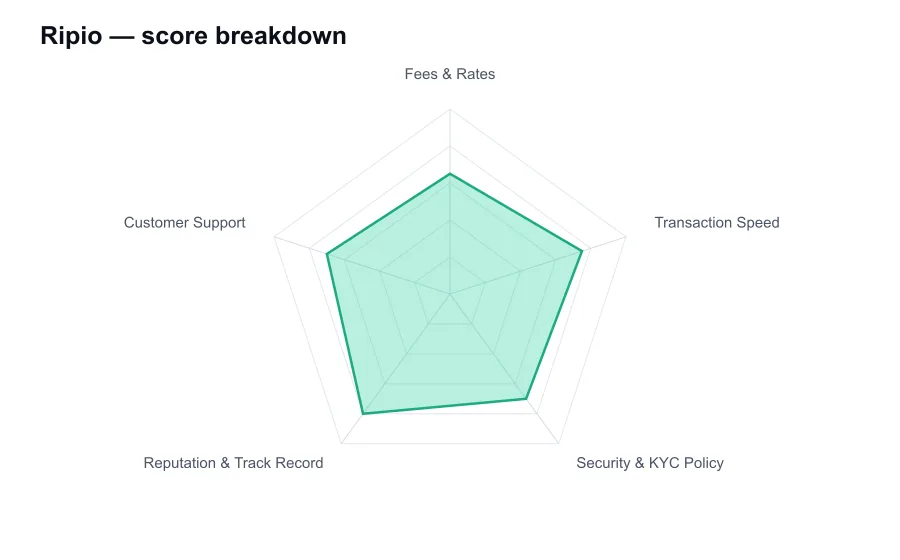
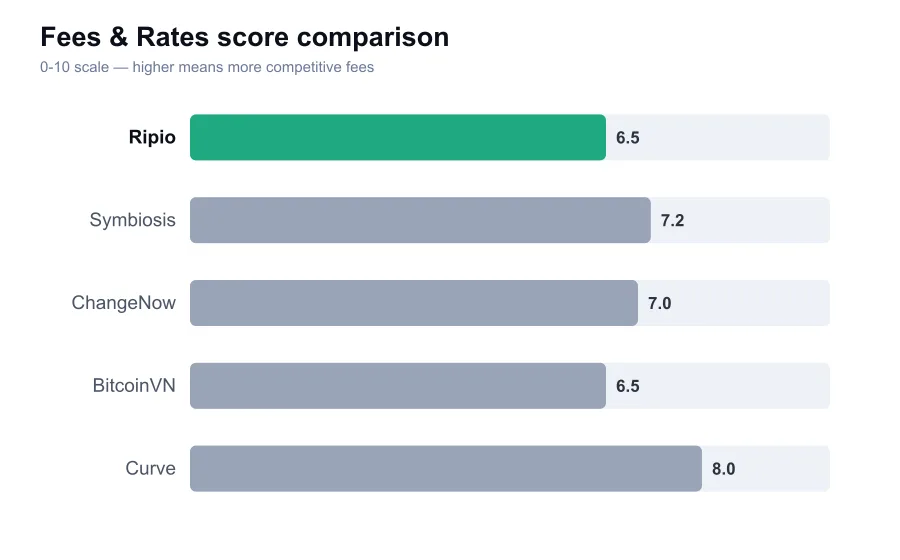
| Fees & Rates | 6.5 | Ripio Trade is clearer, consumer app spreads vary |
| Transaction Speed | 7.5 | Strong local funding flow, network speed still applies |
| Security & KYC Policy | 7.0 | Established KYC custodian, not a self custody substitute |
| Reputation & Track Record | 8.0 | Regional operator with roots going back to 2013 |
| Customer Support | 7.0 | Good regional fit, difficult cases can take time |
Ripio is one of Latin America's most recognizable crypto companies, and its history gives it a different weight from the many small exchanges that appeared during the last bull market. Founded in Argentina in 2013 under the name BitPagos, it evolved from Bitcoin payments into a regional consumer crypto platform. Today it serves users across parts of Latin America with buying, selling, wallet services, and in some markets more advanced trading tools. That long runway is a genuine advantage.
The company understands the practical role crypto plays in the region. For many Ripio customers, Bitcoin is not just a speculative chart. Stablecoins can be a hedge against local currency weakness, a way to receive international value, or a bridge for moving money. Ripio's product has been shaped by those use cases. Its app is aimed at ordinary users first, which makes it more approachable than an exchange designed around professional traders.
Fees require a careful reading because Ripio has more than one type of product. The basic app experience is largely based on buy and sell quotes, where spread can be as important as any visible charge. Ripio Trade, its more advanced trading environment where available, has used a maker and taker model that is far easier to evaluate. Traders should not assume the price in the consumer app matches the economics of a limit order on a trading venue.
For simple purchases, the app is convenient and the final quote is the figure that matters. The effective cost can be higher than a liquid global exchange, especially during rapid market moves or for less actively traded assets. That is not unique to Ripio. It is the standard retail exchange compromise. The platform makes conversion easier, but it is not automatically the cheapest way to acquire Bitcoin, Ether, or dollar stablecoins.
Ripio Trade is the better option for users who know how an order book works and can access it in their jurisdiction. Transparent maker and taker charges are preferable to guessing at a retail spread, and limit orders give customers more control over entry price. Liquidity still may not match Binance, Coinbase, Kraken, or the largest local peer to peer markets. A limit order is only useful if there is enough opposing interest to fill it at the desired price.
Deposit and purchase speed are usually good once an account is verified and a local transfer clears. In Argentina and neighboring markets, that local connectivity is a major reason to consider Ripio. An internal balance update can happen quickly after funds are credited. Crypto withdrawals depend on the selected network and operational review, while incoming blockchain transfers depend on confirmation requirements. Anyone sending a large amount should test with a small transaction first.
The wallet side is convenient but custodial. Ripio holds keys for assets kept in the app, which removes some technical burden from a beginner but introduces dependence on the company. That is a reasonable arrangement for small spending balances or trading inventory. It is not the right place for a life changing Bitcoin position. Ripio has been around for a long time, but no centralized platform can give users the direct control that self custody does.
Security practices include account authentication, verification procedures, transaction controls, and compliance monitoring. Those are necessary basics, and Ripio's longevity suggests it has built operational competence. Still, users should enable every available security setting, use a unique password, protect their email account, and be suspicious of impersonators. Crypto support scams often target established brands precisely because customers recognize the name and trust it.
KYC is required for normal use. Ripio operates openly across regulated or regulation minded jurisdictions, so identity documentation and anti money laundering checks are part of the deal. Higher volumes can lead to more questions about source of funds. This may frustrate users who expect crypto to work like cash, but Ripio is not trying to be an anonymous wallet. It is a centralized financial service with regional compliance obligations.
The reputation picture is stronger than average for Latin American retail crypto. Ripio has survived multiple Bitcoin cycles, Argentine economic upheaval, and the collapse of several global crypto firms. It has also attracted institutional investment and expanded beyond its home market. That does not eliminate risk, but it makes the company more credible than a recently launched app with little operational history.
There are limits to that credibility. Ripio is not publicly traded, does not provide the type of exhaustive financial disclosure expected from a major bank, and should not be mistaken for one. Customers do not receive government deposit insurance for crypto balances. The right question is not whether Ripio is perfect. No crypto custodian is. The question is whether its history, regional footprint, and operating model justify the amount of money you plan to leave under its control.
Customer support is generally one of Ripio's more important regional advantages. Spanish language resources and familiarity with local payment systems make a difference, especially for users who find international exchange support impersonal. Routine requests can be manageable through its help channels. Reports become more mixed when accounts are restricted, documentation is requested, or a transfer requires manual investigation. That is where a large customer base can make response times feel slower than users expect.
Against SatoshiTango and Tiendacrypto, Ripio offers a more developed brand and a broader regional story. Against Bitso, it remains a serious local competitor, though product availability and pricing vary by country. Against Binance, it cannot match the same global liquidity or breadth. The sensible comparison is not a single universal ranking. Ripio is often the stronger choice for regional accessibility and consumer support, while global exchanges remain stronger for pure trading execution.
Ripio works best for someone who wants a known Latin American provider and does not need the complexity of an institutional exchange. It is also a reasonable starting point for users who intend to buy stablecoins or Bitcoin periodically and can compare quotes before transacting. It is less suitable for high frequency traders, large scale market makers, or privacy focused users. Those groups need different infrastructure.
My final judgment is favorable, with conditions. Ripio has earned its reputation through endurance and regional relevance, not by pretending that crypto is simple or riskless. The consumer app is useful, but users should not accept its quoted price without comparison, and they should not leave major long term holdings in custody out of habit. For ordinary Latin American crypto access, Ripio is one of the better established choices. For the lowest costs and deepest markets, it is only the starting point of the search.
| Pros | Cons |
|---|
Ripio suits Latin American users who want a well known regional route into Bitcoin and stablecoins. It is especially useful for beginners who prefer local payments and Spanish language support, while Ripio Trade is better for users comfortable with limit orders. High volume traders should compare liquidity with Binance, Kraken, and Bitso. Privacy seekers and long term self custodians should look elsewhere after purchase.
Ripio is an established Latin American crypto company founded in 2013. It is a legitimate centralized provider, though users still face normal custodial risk.
Ripio Trade uses a more transparent trading model than app based retail quotes. Compare its maker and taker fees and available liquidity before trading.
Yes. Account verification is required for normal use, and larger or unusual transactions may lead to additional compliance checks.
Yes, supported assets can generally be withdrawn to an external wallet. Confirm the asset, network, destination address, and withdrawal cost before sending.
| Alternative | Score |
|---|---|
| Symbiosis Review | 7.2/10 |
| ChangeNow Review | 7.2/10 |
| BitcoinVN Review | 7.3/10 |
| Curve Review | 7.1/10 |
| Nexo Review | 7.1/10 |
| Spark Review | 7.4/10 |